
Many English learners know the words pedicure and manicure, but they sometimes use them in the wrong situation.
The words look and sound similar, so it is easy to mix them up. Both are related to nail and beauty care, and both can describe a beauty treatment, a service, or the process of caring for nails.
The main difference is the part of the body being cared for.
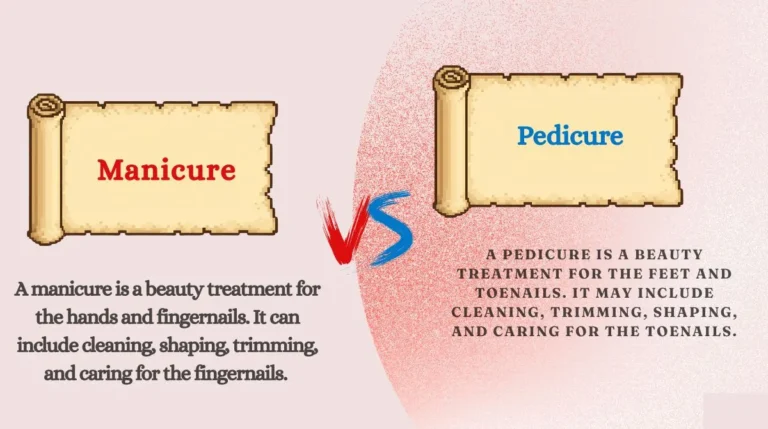
A manicure is mainly a treatment for the hands and fingernails, while a pedicure is mainly a treatment for the feet and toenails. Once you connect each word with the correct body part, the difference becomes much easier to remember.
This distinction is useful in everyday English. You may hear these words at a beauty salon, while talking about self-care, when making an appointment, or when telling a friend what you had done. You may also see them on salon menus and advertisements.
There is another useful point for English learners: manicure and pedicure can work as both nouns and verbs. Understanding how they behave in a sentence can help you speak and write more naturally.
By the end of this guide, you will know exactly when to use each word, how their grammar works, the common mistakes to avoid, and several natural examples you can use in everyday conversations.
What Does “Manicure” Mean?
A manicure is a beauty treatment for the hands and fingernails. It can include cleaning, shaping, trimming, and caring for the fingernails. Depending on the service, it may also include applying nail polish.
The word manicure is usually used as a noun when talking about the treatment itself.
For example:
- I had a manicure yesterday.
- She booked a manicure for Saturday.
- My manicure looks great.
- How much does a manicure cost?
- I need a manicure before the wedding.
- She gets a manicure every few weeks.
- The salon offers several types of manicure.
- He gave himself a simple manicure at home.
The important idea is simple: manicure = hands and fingernails.
When Should You Use “Manicure”?
Use manicure when you are talking about care or treatment for someone’s hands or fingernails.
For example, if your fingernails need trimming and shaping, you might say:
I need a manicure.
If you are talking about a salon appointment, you could say:
I have a manicure appointment at 3 p.m.
If you are describing the result of the treatment, you might say:
Her manicure looks beautiful.
The word does not necessarily mean that nail polish was used. A manicure can involve basic nail care without polish.
Grammar Rule for “Manicure”
Manicure is commonly a countable noun when it means one treatment or appointment.
You can say:
- a manicure
- two manicures
- several manicures
Examples:
I booked a manicure.
She has had three manicures this month.
Manicure can also be used as a verb, especially when talking about giving treatment to someone’s hands or nails.
For example:
The technician manicured her nails.
You may also hear:
She manicures her nails at home.
In everyday speech, however, people often use expressions such as get a manicure, have a manicure, or have my nails done.
Common Confusion About “Manicure”
A common mistake is to think that a manicure means any type of nail treatment. It does not.
When you say:
I am getting a manicure.
the normal meaning is that you are having your hands and fingernails treated.
If you are talking about your toenails and feet, pedicure is the appropriate word.
What Does “Pedicure” Mean?
A pedicure is a beauty treatment for the feet and toenails. It may include cleaning, trimming, shaping, and caring for the toenails. Depending on the service, it can also include nail polish and other foot-care steps.
The easiest way to remember it is:
Pedicure = feet and toenails.
Here are some examples:
- I had a pedicure yesterday.
- She booked a pedicure for Friday.
- My pedicure lasted almost an hour.
- I need a pedicure before my vacation.
- He got a pedicure at the salon.
- She usually gets a pedicure in the summer.
- The salon offers basic and luxury pedicures.
- I want a simple pedicure without nail polish.
When Should You Use “Pedicure”?
Use pedicure when you are talking about professional or personal care for the feet and toenails.
For example:
I need a pedicure before I go on vacation.
You can also use it when talking about an appointment:
I have a pedicure appointment tomorrow.
Or when discussing a service:
How much is a basic pedicure?
The treatment does not have to include colorful nail polish. A pedicure can simply involve basic foot and toenail care.
Grammar Rule for “Pedicure”
Like manicure, pedicure is commonly used as a countable noun when referring to one treatment.
You can say:
- a pedicure
- two pedicures
- several pedicures
Examples:
She booked a pedicure.
The salon performed five pedicures today.
Pedicure can also be used as a verb, although the noun forms such as get a pedicure and have a pedicure are more common in everyday conversation.
For example:
The salon pedicured her feet.
You might also see:
She pedicured her toenails at home.
For natural everyday English, however, most learners will find these forms more useful:
I got a pedicure.
I had a pedicure.
I am getting my toenails done.
Common Confusion About “Pedicure”
Some learners use pedicure for fingernails because they associate the word with general nail care.
Remember that the body part matters.
If the treatment is for your hands, use manicure.
If the treatment is for your feet, use pedicure.
Difference Between Pedicure and Manicure
The main difference between pedicure and manicure is the body part being treated.
A manicure focuses on the hands and fingernails. A pedicure focuses on the feet and toenails.
| Point | Manicure | Pedicure |
|---|---|---|
| Main area | Hands | Feet |
| Nails treated | Fingernails | Toenails |
| Common purpose | Hand and nail care | Foot and toenail care |
| Example | I got a manicure. | I got a pedicure. |
| Related adjective | Manicured | Pedicured |
| Common salon service | Manicure | Pedicure |
Usage Difference
Consider these two sentences:
Sarah got a manicure.
This tells us that Sarah had her hands and fingernails treated.
Now compare:
Sarah got a pedicure.
This tells us that Sarah had her feet and toenails treated.
The sentence structure is almost identical. The important difference is the word describing the service.
Grammar Logic
Both words can be nouns.
A very common structure is:
get + a + treatment
Examples:
I got a manicure.
I got a pedicure.
Another common structure is:
have + a + treatment
Examples:
She had a manicure.
She had a pedicure.
You can also use book when talking about an appointment:
I booked a manicure.
I booked a pedicure.
The grammar is similar because both words name types of beauty treatments.
Sentence Structure Difference
There is no major grammatical difference between the two words. They normally fit into the same sentence patterns.
Compare:
I need a manicure.
I need a pedicure.
Or:
She is getting a manicure.
She is getting a pedicure.
The structure stays the same. Only the type of treatment changes.
Meaning Comparison
The easiest meaning comparison is:
Manicure → hands → fingernails
Pedicure → feet → toenails
For example, imagine that your fingernails are too long. You could say:
I need a manicure.
If your toenails need care, you could say:
I need a pedicure.
If you want both services, you can simply say:
I want a manicure and a pedicure.
This is very common when talking about salon services.
Grammar Rules You Must Remember
Rule 1: Use “Manicure” for Hands and Fingernails
When the treatment is for your hands or fingernails, use manicure.
Example:
I am getting a manicure before the party.
The sentence tells us that the speaker is having their hands or fingernails treated.
A useful question to ask yourself is:
“Am I talking about my hands?”
If the answer is yes, manicure is probably the word you need.
Rule 2: Use “Pedicure” for Feet and Toenails
When the treatment is for your feet or toenails, use pedicure.
Example:
She got a pedicure before her beach vacation.
The treatment is for her feet and toenails.
A simple memory question is:
“Am I talking about my feet?”
If yes, use pedicure.
Rule 3: Use “Get,” “Have,” or “Book” Naturally
When talking about receiving one of these treatments, English commonly uses verbs such as get, have, and book.
Examples:
I got a manicure yesterday.
I had a pedicure last week.
She booked a manicure for Friday.
We booked pedicures for our vacation.
These structures sound natural in everyday English.
You can also say:
I am getting my nails done.
This expression is useful when the exact service is already clear from the conversation.
Rule 4: Both Words Can Be Used as Nouns and Verbs
Most learners will use manicure and pedicure as nouns, but both can also function as verbs.
As nouns:
She had a manicure.
He got a pedicure.
As verbs:
The technician manicured her nails.
The salon pedicured her feet.
For everyday conversation, the noun forms are much more useful for most learners.
Common Mistakes Students Make
Mistake 1: Saying “Pedicure” for Fingernails
Wrong:
I need a pedicure for my fingernails.
Correct:
I need a manicure for my fingernails.
Why? Because fingernails belong to the hands.
A pedicure is connected with feet and toenails.
Mistake 2: Saying “Manicure” for Toenails
Wrong:
I got a manicure on my toenails.
Correct:
I got a pedicure on my toenails.
Again, the body part gives you the answer.
Hands = manicure.
Feet = pedicure.
Mistake 3: Thinking Every Nail Treatment Is a Manicure
Some learners hear the word “nails” and immediately choose manicure.
That can cause confusion because English separates hand and foot treatments.
Compare:
She got a manicure for her fingernails.
She got a pedicure for her toenails.
The word nails by itself is not enough. Ask which nails you mean.
Mistake 4: Forgetting the Article “A”
When talking about one treatment, learners sometimes leave out a.
Less natural:
I got manicure yesterday.
Correct:
I got a manicure yesterday.
The same rule applies to pedicure:
I got a pedicure yesterday.
Because one treatment is being counted, a is normally used.
Mistake 5: Confusing “Nail Polish” With “Manicure”
A manicure is the treatment or service. Nail polish is the colored product that may be applied to the nails.
So these sentences have different meanings:
I got a manicure.
This describes the overall nail-care service.
I bought some nail polish.
This describes the product.
A manicure may include nail polish, but the two expressions do not mean the same thing.
Easy Trick to Remember the Difference
Here is a very simple memory trick:
MANicure = HANDS
Think of the word manicure as your hand treatment.
Then remember:
PEDicure = FEET
Think of pedicure as your foot treatment.
You can also use this two-line rule:
Manicure → hands → fingernails
Pedicure → feet → toenails
Imagine sitting in a salon.
If someone is working on your hands, you are getting a manicure.
If someone is working on your feet, you are getting a pedicure.
If someone is working on both, you are getting a manicure and a pedicure.
This is much easier than trying to memorize a complicated definition.
Another useful clue is that the beginning of pedicure is related to the idea of the foot, while manicure is associated with the hand. You do not need to study the word origins to use the words correctly, but this connection can help you remember them.
When you forget, do not worry about the spelling. Just ask yourself:
Hands or feet?
Hands = manicure.
Feet = pedicure.
Daily Life Examples
Here are some natural examples you may hear in everyday English.
1. At a salon
Customer: I would like to book an appointment.
Receptionist: Sure. Would you like a manicure or a pedicure?
Customer: A manicure, please.
The customer wants treatment for the hands and fingernails.
2. Talking about a vacation
I am getting a pedicure before we go to the beach.
Here, the speaker is talking about foot and toenail care.
3. Talking to a friend
Your manicure looks really nice!
The friend is complimenting the person’s fingernails and hand treatment.
4. Making an appointment
Can I book a pedicure for Saturday morning?
This is a natural way to ask for a salon appointment.
5. Getting both services
I want to get a manicure and a pedicure before the wedding.
The speaker wants both hand and foot treatments.
6. Talking about regular care
She gets a manicure every two weeks.
This means she regularly has her hands and fingernails treated.
7. Asking about price
How much is a basic pedicure?
The speaker is asking about the cost of a basic foot treatment.
8. Talking about doing it at home
I usually do my own manicure at home.
The speaker takes care of their own hands and fingernails.
9. Explaining what you need
My fingernails are getting long. I think I need a manicure.
The word is correct because the speaker is talking about fingernails.
10. Talking about both services
The salon offers manicure and pedicure packages.
This means the salon offers services for both hands and feet.
Practice Section
Choose the correct word: manicure or pedicure.
1. I need a ______ because my fingernails are too long.
A. pedicure
B. manicure
2. She booked a ______ before her beach vacation.
A. manicure
B. pedicure
3. My hands look great after my ______.
A. manicure
B. pedicure
4. He wants his toenails trimmed, so he is getting a ______.
A. manicure
B. pedicure
5. I am going to the salon for both a ______ and a ______.
A. manicure / pedicure
B. pedicure / manicure
Answers
1. B — manicure
Fingernails are on the hands, so the correct word is manicure.
2. B — pedicure
A beach vacation often involves wearing sandals, so the sentence refers to foot and toenail care.
3. A — manicure
A manicure is a treatment for the hands and fingernails.
4. B — pedicure
Toenails are on the feet, so the correct word is pedicure.
5. A — manicure / pedicure
A manicure is for the hands, while a pedicure is for the feet.
FAQs About Pedicure vs Manicure
What is the difference between a pedicure and a manicure?
A manicure is mainly a treatment for the hands and fingernails. A pedicure is mainly a treatment for the feet and toenails. Both can include cleaning, trimming, shaping, and polishing the nails.
Can I use “manicure” in a question?
Yes. Manicure can easily be used in questions.
For example:
Can I book a manicure for tomorrow?
You can also ask:
How much does a manicure cost?
These are natural questions in everyday English.
Can I use “pedicure” in a question?
Yes. Pedicure is commonly used in questions about salon services.
For example:
How much is a pedicure?
Or:
Can I get a pedicure this afternoon?
Both sentences are natural and easy to understand.
Is “manicure” formal or informal?
Manicure is a normal everyday English word. It is not especially formal or informal. You can use it when talking with friends, making a salon appointment, writing a message, or discussing beauty services.
Is “pedicure” only about toenails?
A pedicure mainly focuses on the feet and toenails, although the exact treatment can vary from one salon or service to another. It may include several types of foot and nail care, not just trimming toenails.
Can I say “I got my nails done” instead of “I got a manicure”?
Yes. I got my nails done is a common and natural expression. However, it does not always tell the listener whether you mean fingernails or toenails. If you want to be specific, say manicure for hands or pedicure for feet.
Conclusion
The difference between pedicure and manicure is actually very simple once you connect each word with the correct body part. A manicure is mainly for the hands and fingernails, while a pedicure is mainly for the feet and toenails.
Both words can be used as nouns, and both can appear in common expressions such as get a manicure, have a manicure, book a pedicure, and get a pedicure. In everyday English, these phrases are much more useful than trying to memorize complicated grammar rules.
When you are unsure which word to choose, ask yourself one quick question: Am I talking about hands or feet? Hands means manicure. Feet means pedicure.
Try using these words in your own sentences. The more you use them in real conversations, the easier the difference will become. Soon, you will be able to choose the right word naturally without stopping to think about it.

Evan Rellmont is a writer who turns thoughtful ideas into meaningful words, creating stories and reflections that connect, inspire, and leave a lasting impression.