
If you have ever watched a ship captain give directions, you may have heard phrases such as “move to port” or “keep to starboard.” For many English learners, these words sound difficult because they do not look like ordinary words for left and right.
A beginner may understand “left side” immediately but wonder why sailors use a completely different set of words.
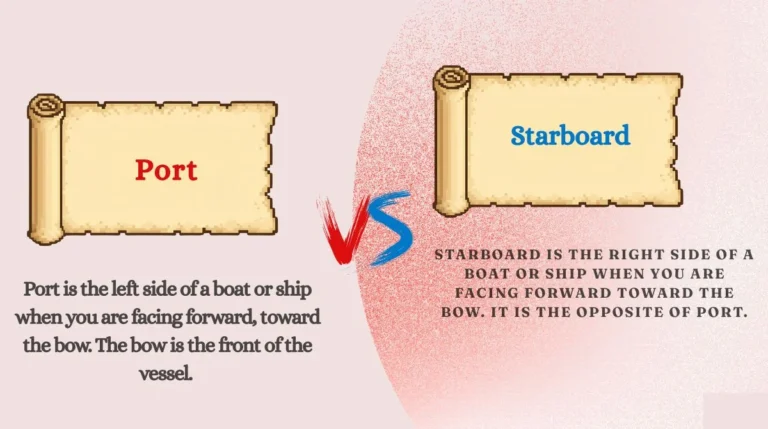
The good news is that the basic idea is very simple. Port means the left side of a boat or ship when you are facing forward toward the bow.
Starboard means the right side when you are facing forward. This is the standard meaning used in nautical language.
The U.S. Coast Guard defines port as the left side looking forward and starboard as the right side looking forward.
These words matter because ships need directions that stay clear no matter where people are standing. “Your left” can change when two people face each other.
Port and starboard do not change. They are fixed parts of the vessel.
By the end of this guide, you will know what each word means, how to use it naturally in a sentence, why sailors use these unusual terms, the most common mistakes, and a simple trick that makes them much easier to remember.
What Does “Port” Mean?
Port is the left side of a boat or ship when you are facing forward, toward the bow. The bow is the front of the vessel. The stern is the back. In nautical English, the side does not change just because you walk around the boat. The port side remains the vessel’s left side when viewed from the stern toward the bow.
For example, you can say:
- “The lifeboat is on the port side.”
- “Move to port.”
- “The light is visible on the port side.”
- “There is a small door near the port rail.”
- “The crew checked the port engine.”
- “A buoy passed down the port side.”
- “We stood on the port side and watched the sunset.”
- “The officer ordered the boat to turn to port.”
In these sentences, port gives a fixed direction on the vessel. It is especially useful in situations where several people are working together and need to understand the same direction immediately.
When should you use “port”?
Use port when you are talking about the left side of a vessel or movement toward that side.
Compare these two sentences:
“The bag is on the left.”
This can be unclear because the listener may ask, “My left or your left?”
“The bag is on the port side.”
This is clear in a boat because the port side is a fixed part of the vessel.
You may also hear “to port” for movement toward the left side, or “port bow” for the front-left area of the vessel.
Grammar rule for “port”
When port means the left side of a ship, it is generally used as a noun or as an adjective-like modifier.
As a noun:
- “The vessel turned to port.”
- “Another boat is to port.”
As a modifier:
- “the port engine”
- “the port cabin”
- “the port rail”
You can also use it after prepositions:
- “on the port side”
- “to port”
- “from port”
One important point is that port has other meanings in general English. It can mean a harbor, wine, or a computer connection point. Context tells you which meaning is intended.
Common learner confusion about “port”
Many beginners think port means “harbor” every time they see it. That is not correct.
“The ship entered the port” means the ship entered a harbor.
“The ship turned to port” means the ship turned toward its left side.
The same spelling has different meanings, so you must use the sentence context to understand which one is intended.
What Does “Starboard” Mean?
Starboard is the right side of a boat or ship when you are facing forward toward the bow. It is the opposite of port. This definition is used in standard maritime language and navigation.
Examples:
- “The captain stood on the starboard side.”
- “The smaller boat is to starboard.”
- “Check the starboard engine.”
- “The buoy is off the starboard bow.”
- “Passengers gathered on the starboard side.”
- “The crew repaired the starboard light.”
- “Turn to starboard after passing the marker.”
- “A fishing vessel was visible on our starboard side.”
Like port, starboard can identify a fixed area of a vessel. This is why it is so useful in professional navigation. The International Maritime Organization’s standard marine vocabulary uses phrases such as “the vessel to starboard of you” when describing nearby vessels and movements.
When should you use “starboard”?
Use starboard when you mean the right side of a vessel or movement toward that side.
For example:
“The crew moved to starboard.”
This means they moved toward the vessel’s right side.
“There is another vessel to starboard.”
This means another vessel is on your vessel’s right side, using the vessel’s forward-facing orientation.
You will often see starboard side, starboard bow, starboard engine, starboard light, and similar combinations.
Grammar rule for “starboard”
Starboard is mainly used as a noun or as a modifier.
As a noun:
- “The other vessel is to starboard.”
As a modifier:
- “the starboard engine”
- “the starboard door”
- “the starboard rail”
You may also see it after prepositions:
- “on the starboard side”
- “to starboard”
- “from starboard”
For beginners, the main grammar point is simple: starboard is a specialized nautical term, not a normal replacement for “right” in daily life.
Common learner confusion about “starboard”
Some students hear the word “star” and imagine that it refers to the sky or a special navigation point. It does not. The word has a historical connection with steering.
The word starboard comes from Old English steorbord, meaning the side associated with steering. Historical boats commonly used a steering paddle or oar on the right side, which helps explain why that side became known as starboard.
Difference Between Port and Starboard
The easiest way to understand the pair is to remember one simple fact:
Port = left
Starboard = right
But there is an important detail. You must imagine yourself facing the front of the vessel.
| Word | Side of the vessel | Easy meaning | Common use |
|---|---|---|---|
| Port | Left | Left side | “on the port side” |
| Starboard | Right | Right side | “to starboard” |
Usage difference
The two words are opposites. They describe the same kind of thing: a fixed side of a vessel.
For example:
- “The life raft is on the port side.”
- “The life raft is on the starboard side.”
The first sentence puts it on the left side of the vessel. The second puts it on the right side.
Unlike ordinary left and right, these nautical terms are based on the vessel itself. This gives the crew a shared reference point.
Imagine two sailors standing face-to-face. One sailor’s left side is the other sailor’s right side. If someone simply shouts “Go left!” there can be confusion. But “Go to port!” refers to the vessel’s fixed left side.
Grammar logic
Both port and starboard can work as nouns.
- “The boat moved to port.”
- “The boat moved to starboard.”
They can also act as modifiers before another noun:
- “port side”
- “port engine”
- “starboard side”
- “starboard engine”
For beginners, the phrases “port side” and “starboard side” are often the clearest choices.
Sentence-structure difference
The structure is similar for both words:
- “The ship turned to port.”
- “The ship turned to starboard.”
- “The passengers are on the port side.”
- “The passengers are on the starboard side.”
You can also describe another vessel: “A cargo ship is to port” or “A yacht is to starboard.”
Meaning comparison
Both are technical direction words. The main difference is simply the side they name. Port is also common in general English with other meanings, while starboard is much more strongly connected with nautical language.
Why Are They Called Port and Starboard?
The history makes these words easier to remember.
The word starboard comes from Old English steorbord, literally connected with the “steer-board” or the side used for steering. According to etymological sources, early Germanic boats were often steered with a paddle on the right side.
The story of port is also interesting. Older English used larboard for the left side of a ship. Because “larboard” and “starboard” sounded too similar, the word port came to replace larboard in common nautical use. Etymological records note official moves toward “port” in the nineteenth century, including an Admiralty order in 1844 and a U.S. Navy notice in 1846.
So the modern pair developed partly because sailors needed directions that were clear and easy to distinguish when spoken aloud.
Grammar Rules You Must Remember
Rule 1: Port is the vessel’s left side
When facing forward toward the bow, port is on your left.
Example:
“The captain looked over the port side of the ship.”
A quick mental picture can help: stand facing the front of a boat, then your left is port.
Rule 2: Starboard is the vessel’s right side
When facing forward, starboard is on your right.
Example:
“The rescue boat approached from starboard.”
Do not turn your body around and redefine the sides. The vessel’s port and starboard sides stay fixed.
Rule 3: “To port” and “to starboard” can show direction
These terms do not only name a side. They can describe movement or direction.
Examples:
- “Turn to port.”
- “Move to starboard.”
- “The boat swung to port.”
This structure is common in nautical commands and descriptions.
Rule 4: Use the words for the vessel, not ordinary people
Port and starboard are tied to the vessel’s orientation.
Correct: “The radio is on the starboard side of the boat.”
Unnatural for normal daily English: “My brother is sitting on starboard of me.”
For ordinary conversations outside a nautical setting, left and right are normally better. Use port and starboard when the context is a boat, ship, navigation, or another setting that specifically uses nautical terminology.
Common Mistakes Students Make
Mistake 1: Reversing the two words
A learner may remember that both are boat words but forget which one means left.
Wrong: “Port means right.”
Correct: “Port means left.”
Wrong: “Starboard means left.”
Correct: “Starboard means right.”
A simple memory trick is explained below.
Mistake 2: Forgetting “facing forward”
The definitions are based on the vessel’s forward orientation, not on whichever way a passenger happens to be looking. The U.S. Coast Guard defines both terms by looking forward toward the bow.
Mistake 3: Thinking “port” always means harbor
This happens because port is a very common English word.
Harbor meaning: “The ship reached port.”
Nautical side meaning: “The ship turned to port.”
Always check the context.
Mistake 4: Using “starboard” in ordinary conversations
Starboard is correct in nautical contexts, but it sounds strange as a normal replacement for “right.” At home, say “Your keys are on the right,” not “Your keys are on starboard.”
Mistake 5: Using “port” and “starboard” as personal left and right
Suppose two people are standing on a beach. One points to the left and says, “That is port.” There is no vessel to establish the nautical reference.
For ordinary directions, use left and right. For a boat or ship, port and starboard provide a fixed reference.
Easy Trick to Remember the Difference
Here is the classic beginner memory trick:
PORT has 4 letters. LEFT has 4 letters.
So:
PORT = LEFT
Then the remaining side must be:
STARBOARD = RIGHT
That is often enough to remember the pair.
You can also imagine sitting in a boat and facing the front. Hold your left hand out and say:
“Port.”
Hold your right hand out and say:
“Starboard.”
Repeat it a few times. Your brain will start connecting the words with the directions.
Another useful memory aid is red for port and green for starboard. Standard navigation lights place red on the port side and green on the starboard side.
The four-letter trick is only a memory aid; the nautical definitions come from established maritime convention.
Daily Life Examples
You may not use these words every day unless you spend time around boats, but you can easily meet them in travel writing, documentaries, boating lessons, films, and maritime instructions.
Example 1
Captain: “Please move to the port side.”
Passenger: “Sure. You mean the left side?”
Captain: “Yes.”
Here, port means the ship’s left side.
Example 2
Crew member: “Is that boat to port or starboard?”
Sailor: “It is to starboard.”
The sailor means the other boat is on the right side.
Example 3
Guide: “You will get a great view from the starboard side.”
This means the right side of the vessel will give the desired view.
Example 4
Captain: “Turn to port after the buoy.”
The instruction tells the boat to turn toward its left side after passing the marker.
Example 5
Crew member: “Check the port engine.”
This refers to the engine located on the vessel’s left side.
Example 6
Passenger: “Which side is the dining area on?”
Staff member: “It is on the starboard side.”
The staff member means the right side of the ship.
Example 7
Sailor: “There is another vessel off our port bow.”
“Port bow” means the front-left area of the vessel.
Example 8
Officer: “Keep the fishing boat to starboard.”
The instruction means the fishing boat should remain on the vessel’s right side.
Practice Section
Choose the correct word: port or starboard.
- The captain turned the boat to ______.
- The life raft is stored on the ______ side.
- The fishing vessel is visible to ______.
- When facing the bow, the ______ side is on the right.
- When facing the bow, the ______ side is on the left.
Answers
- port or starboard, depending on the direction intended. In a real navigation instruction, the context must tell you which way the captain turned.
- port or starboard, depending on which side the raft is actually stored.
- port or starboard, depending on the vessel’s position.
- starboard
- port
The first three examples are a useful reminder that grammar alone cannot choose the direction. The real location or movement decides the correct word.
FAQs
What is the difference between port and starboard?
Port means the left side of a boat or ship when facing forward toward the bow. Starboard means the right side. They are fixed nautical directions used to avoid confusion about left and right.
Is port left or right?
Port is left. A common memory trick is that both port and left have four letters. Remembering this one line helps you identify the correct side quickly.
Is starboard left or right?
Starboard is right. It is the opposite of port. When facing the front of the vessel, starboard is on your right-hand side.
Can I use port and starboard in normal English?
You can, but these words are mainly used in nautical settings. In everyday conversations about roads, rooms, or people, left and right are much more natural. Port and starboard are useful when the context is a boat or ship.
Why do sailors say port instead of left?
Port gives everyone on a vessel the same fixed reference. Personal left and right can become confusing when people face different directions. “Port” and “starboard” stay tied to the ship itself.
Why is starboard called starboard?
The word comes from Old English steorbord, linked to the side used for steering. Historical boats often had the steering paddle or oar on the right side, which is connected to the development of the term.
Conclusion
Port and starboard may look like difficult vocabulary at first, but the basic difference is very small. Port means left, and starboard means right, using the vessel’s forward direction as the reference point.
The important thing is not to memorize a long definition. Picture yourself standing on a boat and facing the bow. Your left is port. Your right is starboard.
Remember the four-letter trick: PORT = LEFT. Once that is fixed in your mind, starboard becomes the opposite side.
These words are more than unusual vocabulary. They give sailors a clear and shared way to describe position and movement. Maritime rules and standard vocabulary use them because clear communication matters when several vessels and crew members are involved.
Read a few examples aloud, make your own sentences, and picture a boat while you practice. After a little repetition, port and starboard will feel much less confusing.

Evan Rellmont is a writer who turns thoughtful ideas into meaningful words, creating stories and reflections that connect, inspire, and leave a lasting impression.