
Have you ever stopped while writing a holiday message and wondered, “How do you spell Christmas?” You are not alone.
This is one of those English words that looks easier than it sounds. Many learners write Cristmas, Chrismas, Christmas, or even Christmass because the pronunciation does not clearly show every letter.
The word is especially tricky because the “ch” in Christmas sounds like /k/, not /ch/ as in chair. The ending can also cause trouble because many people naturally think of the word mass, which usually has two s letters.
Yet the correct spelling is Christmas, with just one s at the end.
The first letter is also normally capitalized because Christmas is the name of a holiday.
This spelling matters because Christmas appears often in everyday English.
You may see it in greeting cards, school notices, emails, advertisements, songs, calendars, social media posts, and conversations about holidays.
By the end of this guide, you will know exactly how to spell Christmas, why the spelling looks unusual, how Christmas differs from Xmas, which mistakes to avoid, and how to remember the correct form without checking a dictionary every time.
What Does “Christmas” Mean?
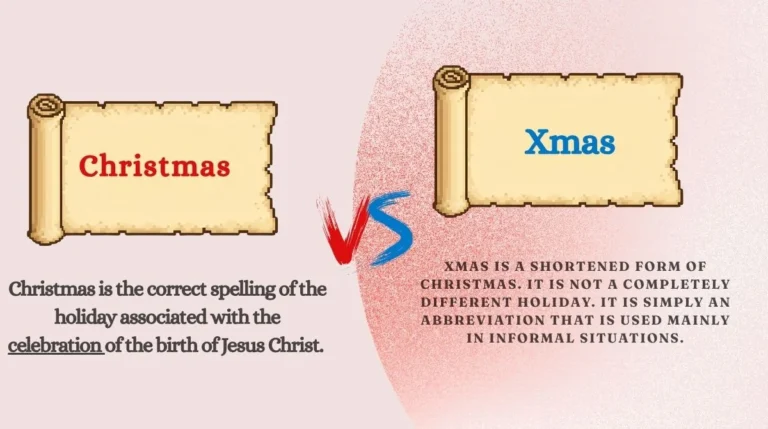
Christmas is the correct spelling of the holiday associated with the celebration of the birth of Jesus Christ. It is traditionally celebrated on December 25 by many Christians, although the word is also widely used in everyday and cultural contexts for the holiday season.
The word can work mainly as a noun, but it can also be used before another noun to describe something connected with Christmas.
For example:
- We are celebrating Christmas with our family.
- Christmas is on December 25.
- I bought a Christmas card for my teacher.
- They decorated the Christmas tree yesterday.
The Correct Spelling
The correct spelling is:
Christmas
Break it into parts visually:
Christ + mas = Christmas
You should not normally write:
- ❌ Cristmas
- ❌ Chrismas
- ❌ Christmass
- ❌ Chrismas
- ❌ Cristmass
The standard spelling is:
- ✅ Christmas
One reason this word confuses learners is its history. Christmas comes from the older expression “Christ’s Mass,” referring to a religious service or feast associated with Christ. Dictionary sources trace the modern word back through Middle English to Old English Cristes mǣsse.
That history also helps explain why the modern word does not behave exactly like the separate word mass.
When Should You Use “Christmas”?
Use Christmas when talking about the holiday, the celebration, or things connected with that holiday.
You can use it as a noun:
I love Christmas.
You can also use it before another noun:
We bought Christmas decorations.
She sent me a Christmas card.
The children are excited about the Christmas party.
Notice that the meaning stays connected to the holiday.
Grammar Rule for “Christmas”
As a holiday name, Christmas is generally written with a capital C.
Correct:
We are traveling at Christmas.
Christmas is my favorite holiday.
Incorrect in standard formal writing:
we are traveling at christmas.
However, when Christmas is part of a longer expression, only the word itself needs its normal capitalization:
Christmas dinner
Christmas morning
Christmas vacation
Christmas tree
Christmas party
8 Example Sentences
Here are some simple examples you can use in everyday English:
- We usually visit our grandparents at Christmas.
- The children are excited about Christmas.
- I bought a beautiful Christmas card.
- Our school is having a Christmas party.
- We decorated the Christmas tree last night.
- She gave me a Christmas present.
- What are you doing for Christmas?
- I always enjoy spending Christmas with my family.
A Common Learner Confusion
Many students spell the word the way it sounds.
They hear something close to:
“Krismas”
Then they try to write:
Krismas or Chrismas
But English spelling does not always follow pronunciation in a simple way. In Christmas, the letters ch represent the /k/ sound. That is why the pronunciation can make the spelling feel surprising.
A useful point to remember is that pronunciation and spelling are related, but they are not always identical in English.
What Does “Xmas” Mean?
Xmas is a shortened form of Christmas. It is not a completely different holiday. It is simply an abbreviation that is used mainly in informal situations. Dictionary sources note that Xmas has a long history, with the X representing the Greek letter chi, the first letter of the Greek word for Christ.
So:
Christmas = full form
Xmas = shortened form
For example:
Merry Christmas!
can sometimes appear informally as:
Merry Xmas!
You may see Xmas in advertisements, text messages, signs, headlines, cards, and casual communication. However, Christmas is the safer choice in formal or educational writing.
When Should You Use “Xmas”?
Use Xmas when the context is informal and the shorter form fits the style.
For example:
Merry Xmas!
What are you doing for Xmas?
We are going home for Xmas.
These uses may be perfectly understandable, but Christmas is generally better when you are writing a school essay, formal email, professional message, or other polished content.
Is “Xmas” Wrong?
No. Xmas is a recognized abbreviation of Christmas. It is not simply a spelling mistake.
The confusion often comes from people thinking that the X is removing the meaning of Christ from the word. Historically, however, that is not where the abbreviation comes from. The X represents the Greek letter chi, associated with the beginning of the Greek word for Christ.
Still, because some readers may prefer the full word, Christmas is often the more respectful or universally suitable choice, especially in formal writing.
8 Example Sentences with “Xmas”
- Are you staying home for Xmas?
- We are traveling during Xmas week.
- I sent my friends an Xmas message.
- The store has an Xmas sale this week.
- What did you get for Xmas?
- We are visiting our family at Xmas.
- She is busy planning the Xmas party.
- They are offering special Xmas discounts.
Common Learner Confusion
Some learners think Xmas is the “correct spelling” of Christmas because they see it frequently online. Others think it is always wrong.
Neither idea is correct.
Christmas is the full standard word.
Xmas is a shortened informal form.
The important thing is to understand the difference between a full word and an abbreviation.
Difference Between Christmas and Xmas
Although Christmas and Xmas refer to the same holiday, they are not identical in style.
| Point | Christmas | Xmas |
|---|---|---|
| Form | Full word | Abbreviation |
| Meaning | The Christmas holiday | Same holiday |
| Style | Standard and widely suitable | Informal or shortened |
| Formal writing | Recommended | Usually avoided |
| Text messages | Common | Very common |
| School writing | Best choice | Usually not preferred |
| Professional writing | Best choice | Less suitable |
| Spelling | Christmas | Xmas |
Usage Difference
The biggest difference is style, not meaning.
Consider these two sentences:
I wish you a Merry Christmas.
I wish you a Merry Xmas.
Both can be understood as referring to the same holiday. The first sounds more complete and standard. The second sounds more casual or abbreviated.
That distinction is useful when you are writing for different audiences.
For a text message to a friend:
Merry Xmas!
may feel natural.
For a school assignment:
Christmas is celebrated in many parts of the world.
is a much better choice.
Grammar Logic
Christmas is a regular word that can function as a noun and can also modify another noun:
Christmas is coming.
Christmas dinner is ready.
Xmas functions in much the same grammatical places, but its shortened form gives the sentence a more informal feel:
What are you doing for Xmas?
We ordered an Xmas cake.
The grammar is not the main problem here. Register and style are what matter most.
Sentence Structure Difference
There is no major sentence-structure change between the two.
Compare:
We are staying home for Christmas.
We are staying home for Xmas.
The structure is the same:
subject + verb + phrase
The only real difference is the word choice and level of formality.
Meaning Comparison
The meaning is essentially the same.
Christmas = the complete form.
Xmas = an abbreviation for Christmas.
So, when someone asks, “How do you spell Christmas?”, the answer should be:
Christmas
not Xmas, because Xmas is a shortened form rather than the full spelling.
Grammar Rules You Must Remember
Rule 1: Spell It “Christmas”
The most important rule is simple: the standard spelling is:
Christmas
Remember the exact order:
C-H-R-I-S-T-M-A-S
Example:
We are having a Christmas dinner.
Be careful not to remove letters because they are difficult to hear.
Rule 2: Use One “S” at the End
This is one of the most common errors.
Some learners write:
❌ Christmass
But the correct spelling is:
✅ Christmas
The word is historically connected to Christ’s Mass, but the modern English word is spelled Christmas, with one final s.
Think of it as one complete word rather than simply attaching the normal spelling of mass to Christ.
Rule 3: Keep the “Ch” Even Though It Sounds Like “K”
This is probably the strangest part for many students.
The beginning is written:
Ch
but it is pronounced with a /k/ sound in Christmas.
That means you should not write:
❌ Krismas
The correct form remains:
✅ Christmas
English has several words where spelling and pronunciation need to be learned together rather than guessed from sound.
Rule 4: Capitalize Christmas
Because Christmas is the name of a holiday, it is normally capitalized.
Correct:
Merry Christmas!
We celebrate Christmas in December.
I bought a Christmas gift.
Incorrect in standard writing:
merry christmas!
we celebrate christmas in december.
A capital letter makes your writing look cleaner and more professional.
Common Mistakes Students Make
Why do people misspell Christmas so often? The main reason is that the word does not sound exactly like the way it looks.
Mistake 1: Cristmas
Incorrect:
❌ Cristmas
Correct:
✅ Christmas
The h must be included after C.
Try remembering the beginning as:
CHRIST
before thinking about the ending.
Mistake 2: Chrismas
Incorrect:
❌ Chrismas
Correct:
✅ Christmas
This mistake happens when learners pronounce the word quickly and forget the t.
Break the word mentally into:
Christ + mas
That small trick can make the missing t easier to remember.
Mistake 3: Christmass
Incorrect:
❌ Christmass
Correct:
✅ Christmas
The modern spelling has only one s at the end.
Mistake 4: Krismas
You may hear something similar to this pronunciation, but it is not the spelling.
Incorrect:
❌ Krismas
Correct:
✅ Christmas
This is a good example of why English spelling should not always be based on sound alone.
Mistake 5: christmas
The lowercase form may appear in casual writing, but the holiday name should normally begin with a capital letter.
Better:
✅ Christmas
Mistake 6: Thinking “Xmas” Is the Spelling
Xmas is not the full spelling of the word. It is an abbreviation.
So if a teacher asks:
“How do you spell Christmas?”
write:
Christmas
not:
Xmas
Easy Trick to Remember the Difference
Here is a simple memory trick that works well for beginners.
Think: “CHRIST + MAS”
Do not try to memorize the whole word as one difficult group of letters.
Instead, see it as:
CHRIST + MAS
The first part is familiar:
CHRIST
Then add:
MAS
Together:
CHRISTMAS
Now notice something important:
CHRIST + MAS = CHRISTMAS
There is only one s at the end.
You can also say the letters quietly to yourself:
C-H-R-I-S-T-M-A-S
Then picture a Christmas tree beside the word.
Another Easy Trick
Remember three things:
CH → keep the H
T → do not forget the T
S → only one S at the end
So the word becomes:
CH + RIST + MAS
or more naturally:
CHRIST + MAS
When writing quickly, these are the three places where your brain is most likely to make a mistake.
A Real-Life Memory Trick
Imagine writing a Christmas card.
At the top, you write:
Merry Christmas!
Look at the word before sending the card:
Christmas
If it has Ch, t, and only one final s, you have it right.
Daily Life Examples
The word Christmas is used in many ordinary conversations. Learning it through real sentences is much easier than memorizing a dictionary definition.
Example 1: Talking About Plans
A: What are you doing for Christmas?
B: I’m visiting my family.
Here, Christmas refers to the holiday period or celebration.
Example 2: Talking About Gifts
A: Have you bought your Christmas gifts?
B: Not yet. I’m still shopping.
Here, Christmas describes the type of gifts.
Example 3: Talking About Decorations
A: Your house looks beautiful!
B: Thanks! We put up the Christmas decorations yesterday.
Here, Christmas works before the noun decorations.
Example 4: Talking About School
A: When is the Christmas break?
B: It starts next week.
This is a very common expression in school and university settings.
Example 5: Talking About Food
A: What are you making for Christmas dinner?
B: We’re making roast chicken and vegetables.
Example 6: Sending a Greeting
Merry Christmas to you and your family!
This is one of the most familiar uses of the word.
Example 7: Talking About Travel
We usually travel home for Christmas.
This means the speaker travels home around the holiday.
Example 8: Talking About Weather
It feels like Christmas is coming because the weather is getting colder.
The word refers to the approaching holiday season.
Example 9: Informal Texting
What are your plans for Xmas?
Here, Xmas is used because the conversation is casual.
Example 10: Professional Writing
Our office will be closed during the Christmas holiday.
This sounds more appropriate for a workplace notice than using the abbreviation Xmas.
Practice Section
Choose the correct option in each sentence.
1. We are visiting our grandparents at ______.
A. Cristmas
B. Christmas
C. Christmass
2. She bought a beautiful ______ tree.
A. Christmas
B. Chrismas
C. Cristmas
3. Which one is an informal abbreviation?
A. Cristmas
B. Xmas
C. Christmass
4. Choose the correct sentence.
A. I love christmas.
B. I love Christmas.
C. I love Christmass.
5. Which spelling is correct?
A. Krismas
B. Chrismas
C. Christmas
Answers
1. B — Christmas
2. A — Christmas
3. B — Xmas
4. B — I love Christmas.
5. C — Christmas
A helpful habit is to say the word slowly while writing it, especially when you are still learning the spelling.
FAQs About How Do You Spell Christmas?
1. How do you spell Christmas correctly?
The correct spelling is Christmas.
It is spelled C-H-R-I-S-T-M-A-S. The word has one s at the end, and the first letter is normally capitalized when referring to the holiday.
2. Is “Cristmas” a correct spelling?
No. Cristmas is a common misspelling.
The correct form is Christmas, with h after the C. Remember the word as Christ + mas to avoid leaving out important letters.
3. Is Christmas spelled with one S or two S’s?
Christmas is spelled with one s at the end.
Although the word is historically related to “Christ’s Mass,” the modern word is written as one word: Christmas.
4. Is “Xmas” the same as Christmas?
Yes. Xmas is a shortened form or abbreviation of Christmas.
It is common in informal writing, but Christmas is usually the better choice for formal writing, schoolwork, and professional communication.
5. Can I use “Christmas” in a sentence without a capital letter?
In standard English, Christmas should normally begin with a capital C because it is the name of a holiday.
For example:
We are celebrating Christmas with our family.
6. Why is Christmas pronounced differently from its spelling?
English spelling has developed over a long period, and pronunciation does not always match each letter directly.
In Christmas, the ch represents a /k/ sound, which makes the word surprising for learners who expect ch to sound like it does in words such as chair.
Conclusion
So, how do you spell Christmas? The answer is simple:
Christmas
The tricky part is remembering all the letters. Do not write Cristmas, Chrismas, Krismas, or Christmass. The correct word has C-H-R-I-S-T-M-A-S, with one s at the end.
A useful way to remember it is to break the word into Christ + mas. Also remember that the ch is pronounced like a k sound, even though it is written with ch.
You should also know the difference between Christmas and Xmas. Christmas is the full standard word, while Xmas is an informal abbreviation. Both can refer to the same holiday, but the full form is the better choice for formal and educational writing.
Spelling becomes much easier when you see a word in real sentences again and again. Write Christmas, use it in your messages, and practice saying and spelling it together. Soon, this once-confusing word will feel completely natural.

Evan Rellmont is a writer who turns thoughtful ideas into meaningful words, creating stories and reflections that connect, inspire, and leave a lasting impression.