
Have you ever seen the phrase “free reign” and wondered whether it should actually be “free rein”? You are not alone.
These two words sound exactly the same when we say them, and they look almost the same when we write them.
That makes this pair especially confusing for English learners.
The correct expression for “complete freedom to do something” is free rein. The word rein comes from horse riding. A rein is a strap used to guide or control a horse.
When a rider gives a horse loose reins, the horse has more freedom to move. Over time, this idea became a common English expression meaning freedom to act, decide, speak, or create without many limits.
The word reign has a completely different meaning. It is connected with kings, queens, rulers, and periods of power.
A king may reign over a country, and a queen may have a long reign.
The confusion is understandable because both words are pronounced /reɪn/. However, their meanings and uses are different.
By the end of this guide, you will know exactly when to use free rein and when to use reign.
You will also learn useful sentence patterns, common mistakes, simple memory tricks, and everyday examples that will help you use the correct spelling naturally.
What Does “Rein” Mean?
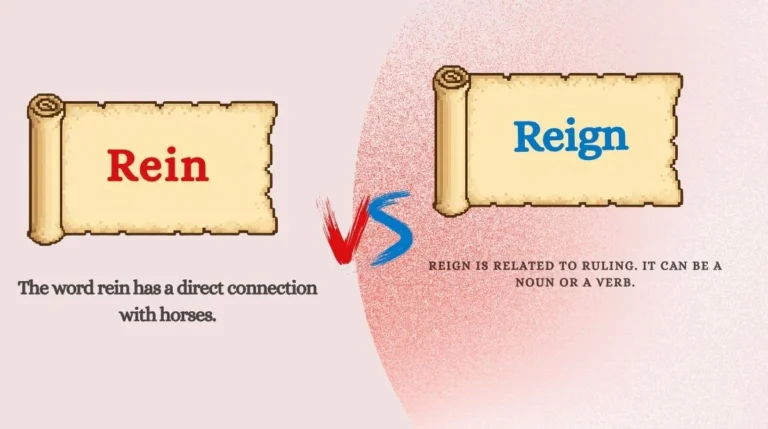
The word rein has a direct connection with horses. A rein is a long, thin strap, usually made of leather, that a rider uses to control and guide a horse. You can pull the reins to slow a horse down, stop it, or turn it in a certain direction.
The word also has a figurative meaning. It can describe control, guidance, or freedom. This is where the expression free rein comes from.
When someone has free rein, they are given the freedom to act or make decisions without asking for permission first. Cambridge defines the expression as the freedom to do, say, or feel what you want.
A very common pattern is:
give someone free rein to + verb
For example:
- The manager gave Sarah free rein to design the website.
- My parents gave me free rein to choose my university subjects.
- The director gave the actors free rein to change some of the dialogue.
- Our teacher gave us free rein to choose our presentation topic.
- The company gave the designer free rein to create the new logo.
- She was given free rein to organize the event.
- The writer was given free rein to develop the story.
- The children were given free rein to use their imagination.
Notice that free rein is normally followed by to + base verb when we explain what freedom someone has.
For example:
They gave me free rein to choose.
Here, “choose” is the base form of the verb.
You can also use the expression with have:
The artist had free rein to experiment with new ideas.
And you can use it with emotions or imagination:
She gave her imagination free rein.
Cambridge gives examples involving filmmakers experimenting freely and emotions being allowed to act without restriction.
Why Do Learners Get Confused?
The main reason is pronunciation. Rein and reign sound the same. They are homophones, which means they have the same pronunciation but different meanings and spellings.
There is also a logical problem. When people hear “free rein,” they may think, “Why would a horse strap mean freedom?” Someone who does not know the history of the phrase may naturally choose reign, because reign is connected with power and authority.
That spelling is understandable, but in the normal expression meaning “complete freedom,” it is not the standard choice. The correct form is free rein. Merriam-Webster describes “free reign” as a common misinterpretation of the original expression.
What Does “Reign” Mean?
Reign is related to ruling. It can be a noun or a verb.
As a noun, reign means the period during which a king, queen, or other ruler is in power.
For example:
- The king’s reign lasted for forty years.
- Her reign was remembered for major changes.
- During his reign, the country became more powerful.
- The queen’s reign ended after her death.
- The young king began his reign at the age of twenty.
- Historians often study the ruler’s reign.
- His reign was marked by several important wars.
- The emperor’s reign lasted only a few years.
As a verb, reign means to rule as a king, queen, or other ruler.
For example:
- Queen Elizabeth II reigned for many years.
- The king reigned over a large kingdom.
- The emperor reigned with strong authority.
- A new monarch began to reign.
- The queen reigned peacefully for decades.
- Several rulers reigned over the region.
- The king continued to reign despite political problems.
- The dynasty reigned for several centuries.
The word can also be used in a more general, figurative way to mean that something is dominant or widespread.
For example:
Chaos reigned in the classroom.
This does not mean that chaos became a king. It means that there was a lot of chaos, and chaos seemed to control the situation.
Another example is:
Silence reigned after the announcement.
Here, “reigned” means that silence was the strongest condition in that situation.
This is very different from free rein. Reign is about ruling, dominance, or a period of authority. Rein is about control with reins and, in the expression “free rein,” freedom to act.
Difference Between Rein and Reign
The easiest way to understand the difference is to remember their basic ideas:
Rein = control or freedom connected with a horse
Reign = rule or power connected with a ruler
Both words are pronounced the same, but spelling carries the meaning.
| Word | Basic meaning | Common use | Example |
|---|---|---|---|
| rein | A strap used to control a horse | free rein, rein in, tight rein | She gave him free rein to decide. |
| reign | Rule or period of rule | king, queen, ruler, government | The king’s reign lasted 30 years. |
Usage Difference
Use rein when you are talking about freedom, control, guidance, or limiting something.
Examples:
The teacher gave us free rein to choose our topics.
The company needs to rein in its spending.
The manager keeps a tight rein on expenses.
These expressions all come from the idea of controlling a horse with reins. Cambridge also lists expressions such as “keep a tight rein on,” “take over the reins,” and “rein something in.”
Use reign when you are talking about someone ruling or being in power.
Examples:
The queen’s reign lasted for many years.
The king reigned over the country.
Peace reigned throughout the kingdom.
The grammar is different too. Reign often appears with a ruler or ruling period:
the king reigned
during her reign
his reign ended
By contrast, rein often appears in expressions connected with freedom or control:
have free rein
give someone free rein
rein in spending
keep a tight rein on something
Meaning Comparison
Compare these two sentences:
The designer was given free rein to create the poster.
This means the designer could make decisions freely.
The king’s reign lasted twenty years.
This means the king ruled for twenty years.
The words are not interchangeable.
You cannot normally replace “rein” with “reign” in the first sentence simply because both words sound the same.
Grammar Rules You Must Remember
Rule 1: Use “free rein” for freedom
When you mean that a person has freedom to act, decide, create, or speak, use free rein.
Correct:
The artist was given free rein to express her ideas.
Incorrect:
The artist was given free reign to express her ideas.
The first sentence uses the established expression correctly.
Rule 2: Use “reign” for rulers and periods of rule
Use reign when discussing the time or power of a king, queen, emperor, or another ruler.
Correct:
The queen’s reign lasted for many years.
Correct:
The king reigned over the country.
You are talking about political or royal power, so reign is the right word.
Rule 3: “Free rein” often comes with “to + verb”
A common structure is:
give/have free rein to + verb
Examples:
She was given free rein to choose the music.
The students had free rein to design the room.
The director gave the actors free rein to change the scene.
This pattern is extremely useful in everyday English. Cambridge specifically gives the structure “give someone free rein to do something.”
Rule 4: Do not let the spelling fool you
The pronunciation cannot help much because rein and reign sound the same.
Instead, ask yourself:
Am I talking about freedom or ruling?
If the meaning is freedom, use rein.
If the meaning is ruling, use reign.
That one question can prevent many spelling mistakes.
Common Mistakes Students Make
One common mistake is writing:
The boss gave me free reign to change the office design.
Many learners write this because “reign” is connected with authority, and the boss has authority. But the sentence is not talking about the boss’s period of rule. It is talking about giving someone freedom.
Correct:
The boss gave me free rein to change the office design.
Another common mistake is:
The king’s free rein lasted thirty years.
That does not make sense if you mean the period in which the king ruled.
Correct:
The king’s reign lasted thirty years.
Here is another example:
Wrong: The manager gave the team free reign to solve the problem.
Correct: The manager gave the team free rein to solve the problem.
Why? Because the team received freedom to make its own choices.
Now look at this:
Wrong: The queen’s rein lasted fifty years.
Correct: The queen’s reign lasted fifty years.
Why? Because the sentence describes the time she ruled.
Easy Correction Tip
When you see free, stop and think about the meaning.
Does the phrase mean:
“You can do what you want.”
Then choose:
free rein
Does the sentence mean:
“A king or queen is ruling.”
Then choose:
reign
This simple check works in most everyday situations.
Easy Trick to Remember the Difference
Here is a memory trick that many students find useful:
REIN = RIDE
Both rein and ride remind you of a horse.
Imagine yourself sitting on a horse. You are holding the reins. If you loosen those reins, the horse gets more freedom.
That gives you:
loose reins → more freedom → free rein
Now think about a crown.
REIGN = ROYAL
A king or queen has a reign.
So remember:
Horse → rein
Crown → reign
You can also use a short classroom trick:
Free rein = freedom
Royal reign = ruler
There is a historical reason this trick works. Merriam-Webster explains that the expression “free rein” began with horseback riding and later developed its figurative meaning of unrestricted freedom. Its figurative use goes back to the 17th century.
Think of a horse running freely because the rider is holding the reins loosely. That picture makes the spelling much easier to remember.
Daily Life Examples
Here are some natural examples you may hear or use in real conversations.
1. At school
Teacher: You can choose any topic for your project.
Student: Great! So you are giving us free rein?
Teacher: Exactly. Choose something you really enjoy.
2. At work
My manager gave me free rein to organize the meeting.
This means the manager allowed me to make the decisions myself.
3. Talking about creativity
The writer was given free rein to develop the story.
The writer had plenty of creative freedom.
4. Talking about children
We gave the children free rein to decorate the room.
They could make their own choices about the decoration.
5. Talking about imagination
When I write, I give my imagination free rein.
This means I allow my imagination to move freely without strict limits.
6. Talking about a new employee
The company gave the new designer free rein to create the campaign.
The designer was trusted to make creative decisions.
7. Talking about a ruler
The king’s reign lasted more than twenty years.
Here, reign refers to the time when the king ruled.
8. Talking about a historical period
During her reign, many schools were built.
The sentence describes events during the time she was in power.
9. Talking about freedom at home
My parents gave me free rein to choose the university I wanted.
This means they allowed me to make that important decision.
10. Talking about a team
The coach gave the players free rein to develop their own strategy.
The players had freedom to make decisions instead of following every instruction.
Notice how natural free rein sounds in situations involving choices, creativity, ideas, feelings, and independence. Reign, on the other hand, belongs mainly to the language of rulers, authority, and periods of rule.
Practice Section
Choose rein or reign in each sentence.
- The manager gave the designer free ______ to choose the colors.
- The queen’s ______ lasted for many years.
- The teacher gave us free ______ to choose our own project topics.
- The emperor’s ______ was remembered by historians.
- She was given free ______ to change the plan.
Answers
- rein — The designer received freedom.
- reign — This is the queen’s period of rule.
- rein — The students received freedom to choose.
- reign — The emperor’s period of rule is being discussed.
- rein — She was given freedom to make changes.
A useful habit is to explain the reason, not just memorize the answer. Ask yourself whether the sentence is about freedom or ruling.
FAQs
What is the difference between free rein and free reign?
Free rein is the correct standard expression when you mean complete freedom to act, decide, speak, or create. Reign is connected with ruling, especially by a king or queen. “Free reign” is commonly seen, but it is generally treated as a mistaken form of “free rein” when the intended meaning is freedom.
Can we use free rein in questions?
Yes. You can easily use free rein in questions.
For example:
Did your boss give you free rein to make the decision?
Are we given free rein to choose our own topic?
The expression works naturally in questions, statements, and negative sentences.
Is free rein formal or informal?
Free rein is a normal English idiom used in both spoken and written English. It can appear in casual conversation, school writing, business communication, journalism, and formal writing. It is not limited to one special style.
Is “free reign” ever correct?
The spelling reign is correct when it refers to ruling or a period of rule. For example, “The king’s reign lasted twenty years.” However, when you mean that someone has complete freedom, the standard expression is free rein, not free reign.
Why do free rein and free reign sound the same?
They are homophones. This means they have the same pronunciation but different meanings and spellings. Rein relates to horse control, while reign relates to ruling or being in power.
Is it correct to say “give free rein to something”?
Yes. This is a common and useful structure.
For example:
The teacher gave free rein to the students’ creativity.
She gave free rein to her imagination.
You can also say give someone free rein to do something, such as “They gave me free rein to redesign the website.”
Conclusion
The difference between free rein and free reign becomes much easier once you connect each spelling with its meaning.
Use free rein when someone has freedom to act, choose, speak, feel, or create without many restrictions. The expression comes from horse riding: loose reins give a horse more freedom to move.
Use reign when you are talking about a ruler, royal power, or a period of rule. A king can reign over a country, and a king’s reign can last many years.
The key memory trick is simple:
Rein → horse → freedom or control
Reign → ruler → royal power
Although free reign appears often, especially because the two words sound identical, free rein is the standard form for the meaning “complete freedom.”
Do not worry if you have made this mistake before. Even native English speakers sometimes mix these words up. The important thing is to understand the meaning behind each spelling. Once you remember the horse and the crown, choosing the right word becomes much easier.

Evan Rellmont is a writer who turns thoughtful ideas into meaningful words, creating stories and reflections that connect, inspire, and leave a lasting impression.
1 thought on “Free Rein or Free Reign? The Correct Choice Explained in Simple English (2026)”